
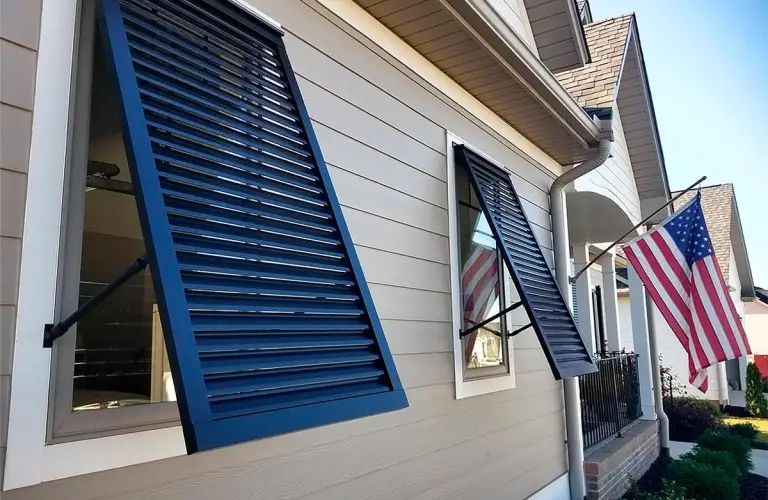
Last June, a tropical storm remnant tore through Morgan County, sending debris flying past the Morgan County Courthouse and shattering unprotected windows along the Pine Street Historic Area. For owners of Madison’s irreplaceable Greek Revival mansions and Colonial-era wooden structures, that storm was a wake-up call: your home’s original wavy glass and hand-crafted millwork won’t survive the next severe weather event without proper protection.
If you’ve noticed your Walton EMC bills spiking after storms due to HVAC systems working overtime through damaged window seals, you already understand the hidden costs of inadequate storm preparation. Madison, GA homeowners are searching for hurricane shutter solutions at record rates—and with good reason.
Why Madison’s Historic Homes Face Unique Storm Vulnerabilities
Unlike modern construction, the Greek Revival mansions surrounding Downtown Madison and Madison Town Park were built with single-pane windows, wooden frames, and decorative trim that can’t withstand impact from airborne debris traveling at 60+ mph. According to the Insurance Institute for Business & Home Safety, windows are the most vulnerable entry point during severe storms, with 30% of all storm-related home damage originating from window failures (Source: Insurance Institute for Business & Home Safety, 2022).
The Triple Threat Facing Morgan County
Your Madison home contends with three distinct severe weather patterns that have intensified over the past decade:
- Tropical storm remnants pushing inland from the Gulf and Atlantic, bringing sustained winds of 40-60 mph through Morgan County
- Severe thunderstorm complexes producing damaging straight-line winds exceeding 70 mph—the National Weather Service recorded 23 severe thunderstorm warnings for Morgan County in 2023 alone (Source: National Weather Service Atlanta, 2023)
- Tornado-producing supercells during spring and fall, with Georgia experiencing a 15% increase in tornado touchdowns since 2010 (Source: NOAA Storm Prediction Center, 2023)
Historic Window Replacement Costs vs. Protection Costs
When storm damage destroys original windows in a historic Madison home, you’re not simply replacing glass—you’re potentially facing custom millwork, specialty glazing, and Historic Preservation Commission reviews. A single custom-replicated Greek Revival window can cost $1,200-$3,500 per unit, while protective shutters for that same window typically run $200-$600 installed (Source: National Trust for Historic Preservation, 2022).
| Protection Type | Cost Per Window | Historic Compatibility | Wind Rating |
|---|---|---|---|
| Accordion Shutters | $250-$400 | Moderate | Up to 150 mph |
| Roll-Down Shutters | $400-$600 | High (hidden when retracted) | Up to 180 mph |
| Colonial-Style Shutters | $300-$500 | Excellent | Up to 130 mph |
| Clear Polycarbonate Panels | $150-$250 | High | Up to 140 mph |
Storm Shutter Options Designed for Georgia’s Historic Architecture
Protecting your Downtown Madison home doesn’t mean sacrificing the architectural character that makes this community special. Modern storm shutters Georgia homeowners trust have evolved far beyond industrial-looking panels.
Colonial-Style Functional Shutters
For Greek Revival and Colonial-era structures, functional Colonial-style shutters offer the perfect marriage of protection and period authenticity. These shutters mount on traditional pintles and feature reinforced aluminum cores beneath historically accurate wooden or composite exteriors. When closed during storm warnings, they provide impact resistance rated for winds up to 130 mph while appearing identical to decorative shutters that have graced Madison homes for generations.
Hidden Roll-Down Systems
If your home features elaborate window casings that you don’t want obscured, roll-down hurricane shutters install within concealed housing units above window frames. The University of Florida’s Building Envelope Research Laboratory found that properly installed roll-down shutters reduce wind-driven rain infiltration by 97% compared to unprotected windows (Source: University of Florida Building Envelope Research, 2021). Your elegant Pine Street Historic Area facade remains unchanged until you need protection.
Impact-Resistant Polycarbonate Panels
Impact resistant shutters Madison residents increasingly prefer include clear polycarbonate panel systems. These panels allow natural light during extended storm events while providing protection against debris traveling at speeds up to 100 mph. For homeowners who remember huddling in dark rooms during past storms, the ability to maintain visibility represents a significant quality-of-life improvement.
The True Cost of Waiting: What Madison Homeowners Risk
Georgia’s storm season doesn’t politely announce itself weeks in advance. When tropical storm remnants form in the Gulf, Madison typically receives 48-72 hours of advance warning—far too little time to arrange professional shutter installation.
“After the 2020 derecho damaged three windows on our 1835 Greek Revival, we spent eight months waiting for custom replacement glass from a specialty manufacturer. Our insurance covered materials but not the $4,200 in temporary weatherization and interior water damage repairs we paid out of pocket.”
This experience, common among Madison homeowners, illustrates why proactive protection outperforms reactive repairs.
Insurance Premium Considerations
Many insurance carriers offer premium discounts of 8-15% for homes with certified hurricane shutters or impact-resistant window protection (Source: Insurance Information Institute, 2023). For a Madison historic home with annual premiums exceeding $3,000, that discount can offset a significant portion of your shutter investment within the first few years.
Energy Efficiency Benefits Year-Round
Your Walton EMC energy consumption doesn’t only spike after storm damage—it suffers year-round from the drafty single-pane windows common in historic Madison construction. Closed hurricane shutters create an additional insulating air gap that reduces heat transfer by up to 45% (Source: U.S. Department of Energy Building Technologies Office, 2022). During Georgia’s brutal summer humidity and winter cold snaps, that insulation translates directly into lower utility bills.
Selecting the Right Protective Window Shutters for Your Home
Every Madison home presents unique installation challenges. The proper shutter system for a sprawling Greek Revival mansion differs substantially from what works best on a compact Colonial cottage.
Assessment Factors Specific to Madison Architecture
- Window frame material condition—older wooden frames may require reinforcement before supporting shutter hardware
- Historic preservation requirements—properties within Madison’s historic district must meet specific aesthetic guidelines
- Exposure orientation—west and south-facing windows experience greater storm stress during typical weather patterns
- Accessibility for deployment—upper-story windows may benefit from motorized systems you can operate from ground level
- Budget priorities—protecting the most vulnerable windows first allows phased installation over multiple seasons
Professional Installation vs. DIY Considerations
While hardware stores stock storm panels marketed for DIY installation, improper mounting creates dangerous failure points. The Federal Alliance for Safe Homes reports that improperly installed shutters fail at rates 3-4 times higher than professionally installed systems during actual storm events (Source: Federal Alliance for Safe Homes, 2023). For Madison’s irreplaceable historic structures, professional installation isn’t optional—it’s essential protection for your investment.
Schedule your free hurricane shutter assessment before storm season arrives in Madison. Our team understands the specific architectural requirements of Morgan County’s historic homes and will provide customized recommendations for your property.
Frequently Asked Questions About Storm Protection in Madison
How quickly can hurricane shutters be deployed before a storm reaches Madison?
Properly maintained accordion and roll-down systems deploy in 5-15 minutes per window, allowing complete home protection within 1-2 hours for average-sized residences. Panel systems require 30-45 minutes for a trained homeowner to install on a typical Greek Revival home with 12-16 windows. This deployment speed proves critical when tropical remnants accelerate northward faster than forecast models predict.
Will hurricane shutters affect my historic home’s eligibility for preservation tax credits?
Georgia’s Historic Preservation Division evaluates shutter installations on a case-by-case basis, but removable or retractable systems that don’t permanently alter historic fabric generally qualify as acceptable modifications. Colonial-style functional shutters often enhance historic character while providing protection. We recommend consulting with the Madison Historic Preservation Commission before finalizing your shutter selection to ensure compliance with local guidelines.
What maintenance do storm shutters require in Georgia’s humid climate?
Annual maintenance for aluminum and composite shutters includes lubricating tracks and hinges with silicone-based spray, inspecting mounting hardware for corrosion, and testing deployment mechanisms before storm season begins. Georgia’s humidity accelerates oxidation on exposed metal components, making spring inspections essential. Most systems require 30-60 minutes of annual maintenance to ensure reliable performance when storms threaten.
Frequently Asked Questions
How quickly can hurricane shutters be deployed before a storm reaches Madison?
Properly maintained accordion and roll-down systems deploy in 5-15 minutes per window, allowing complete home protection within 1-2 hours for average-sized residences. Panel systems require 30-45 minutes for a trained homeowner to install on a typical Greek Revival home with 12-16 windows.
Will hurricane shutters affect my historic home’s eligibility for preservation tax credits?
Georgia’s Historic Preservation Division evaluates shutter installations on a case-by-case basis, but removable or retractable systems that don’t permanently alter historic fabric generally qualify as acceptable modifications. Colonial-style functional shutters often enhance historic character while providing protection.
What maintenance do storm shutters require in Georgia’s humid climate?
Annual maintenance includes lubricating tracks and hinges with silicone-based spray, inspecting mounting hardware for corrosion, and testing deployment mechanisms before storm season begins. Georgia’s humidity accelerates oxidation on exposed metal components, making spring inspections essential.

